01 / 08
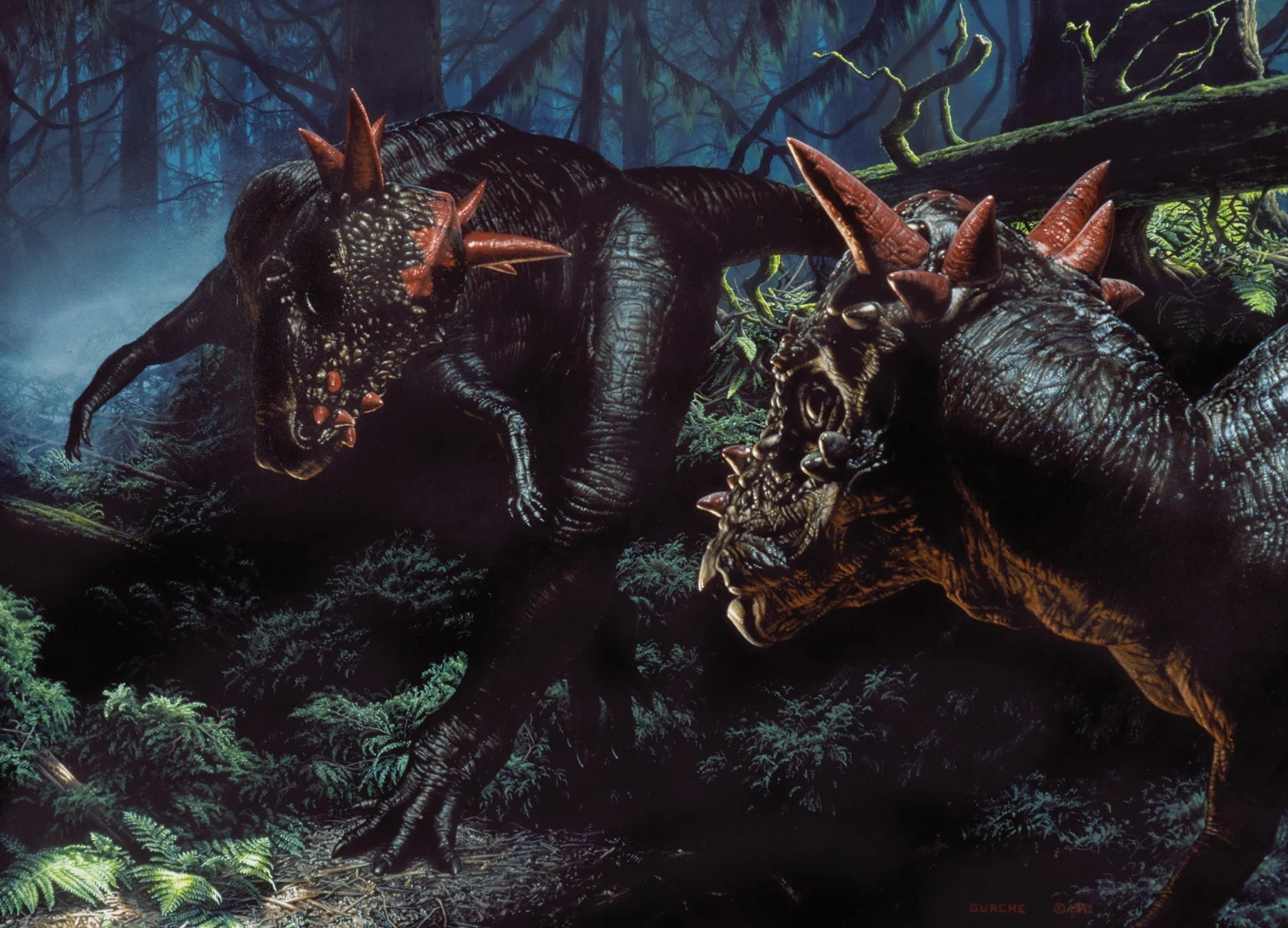
Stygimoloch
The print
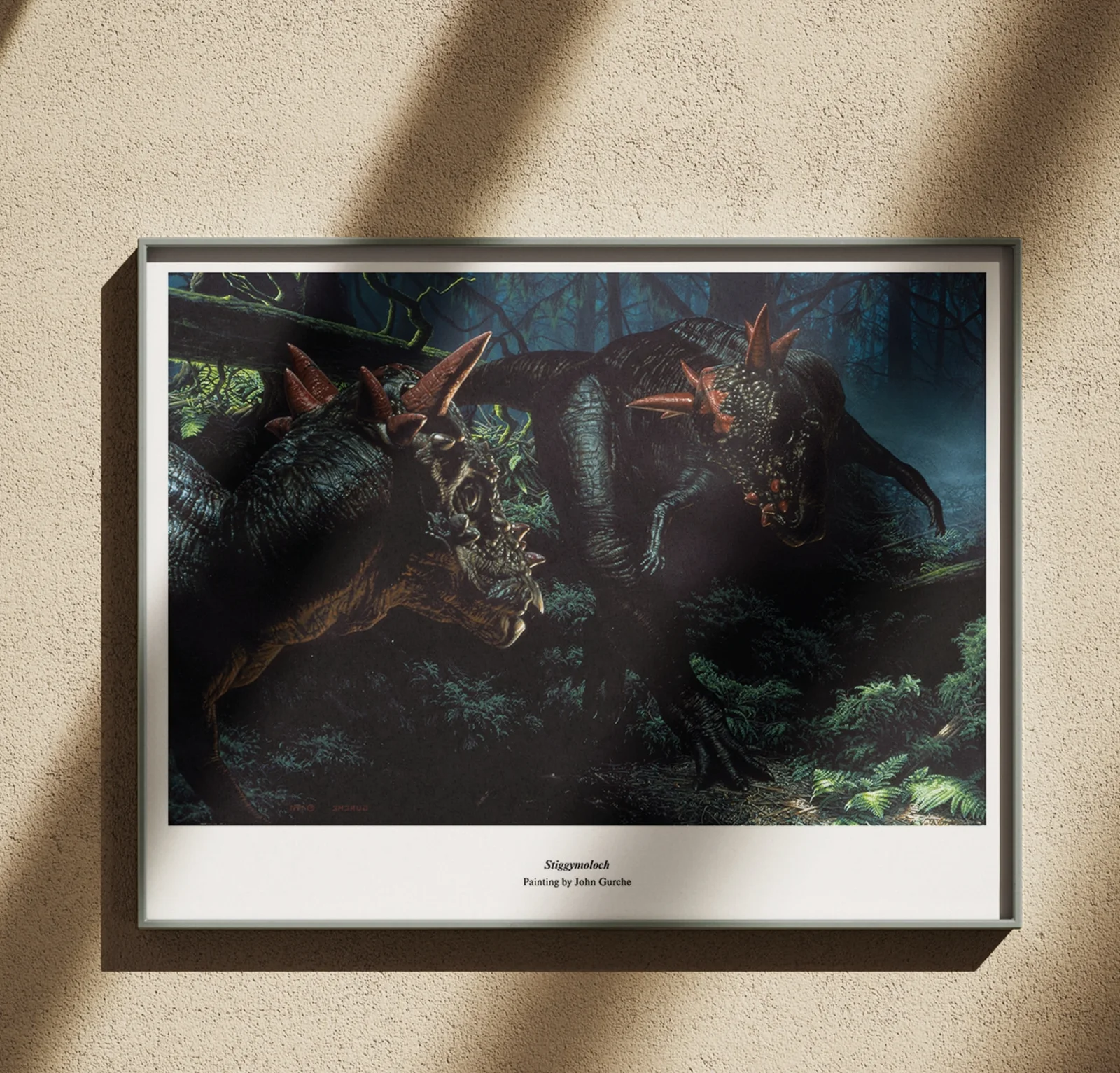
Painted for National Geographic Magazine, January 1993, but not used. Scientific consultant: Hans Sues, Smithsonian Institution.
Painted 1992
- Available sizes
- Limited edition
John Gurche — Paleoartist
Eight paintings from a forty-year career, offered as archival prints for the first time.
08 works
Begin the catalogue01 / 08
The print
Painted for National Geographic Magazine, January 1993, but not used. Scientific consultant: Hans Sues, Smithsonian Institution.
Painted 1992
02 / 08
The print
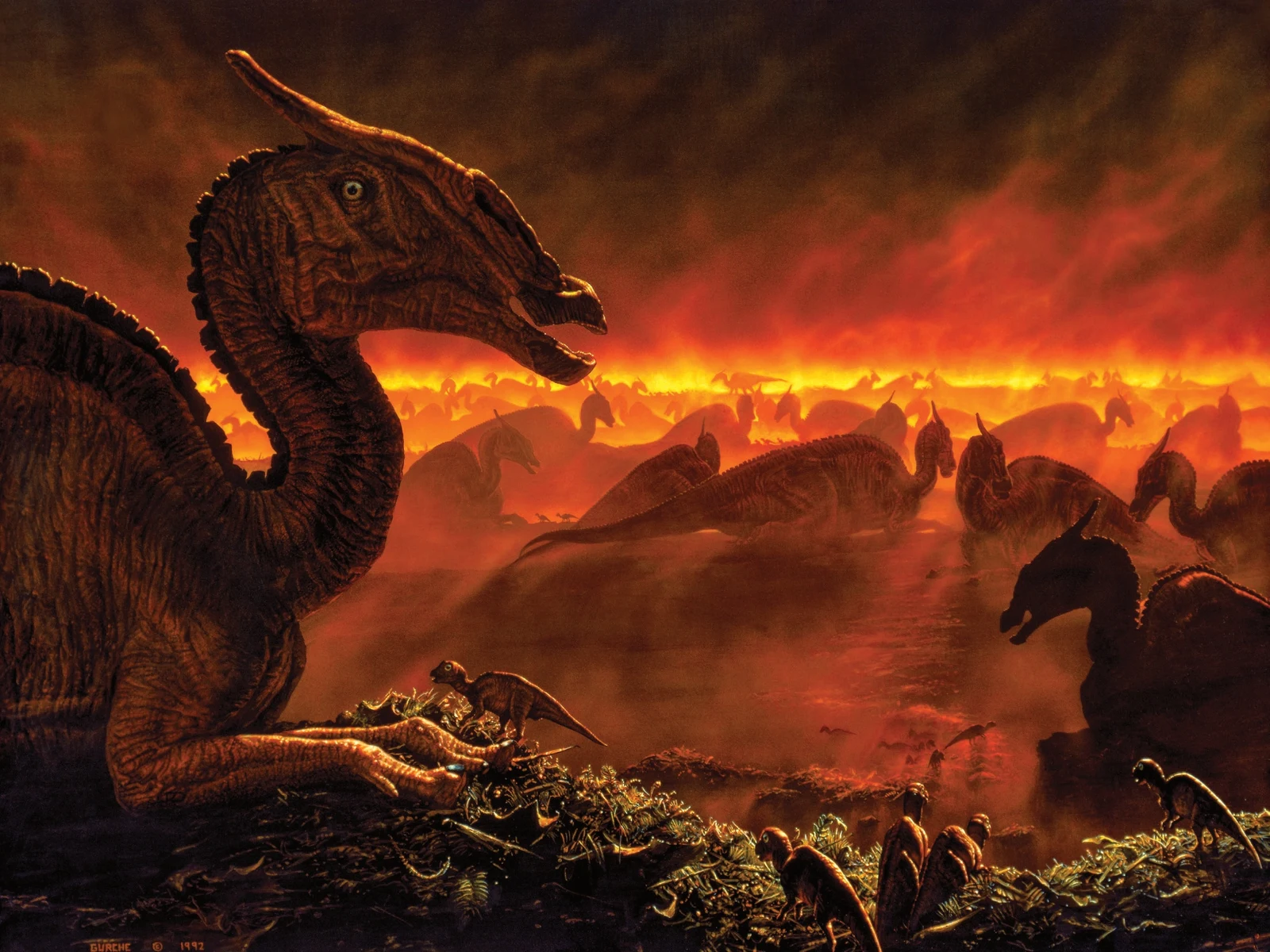
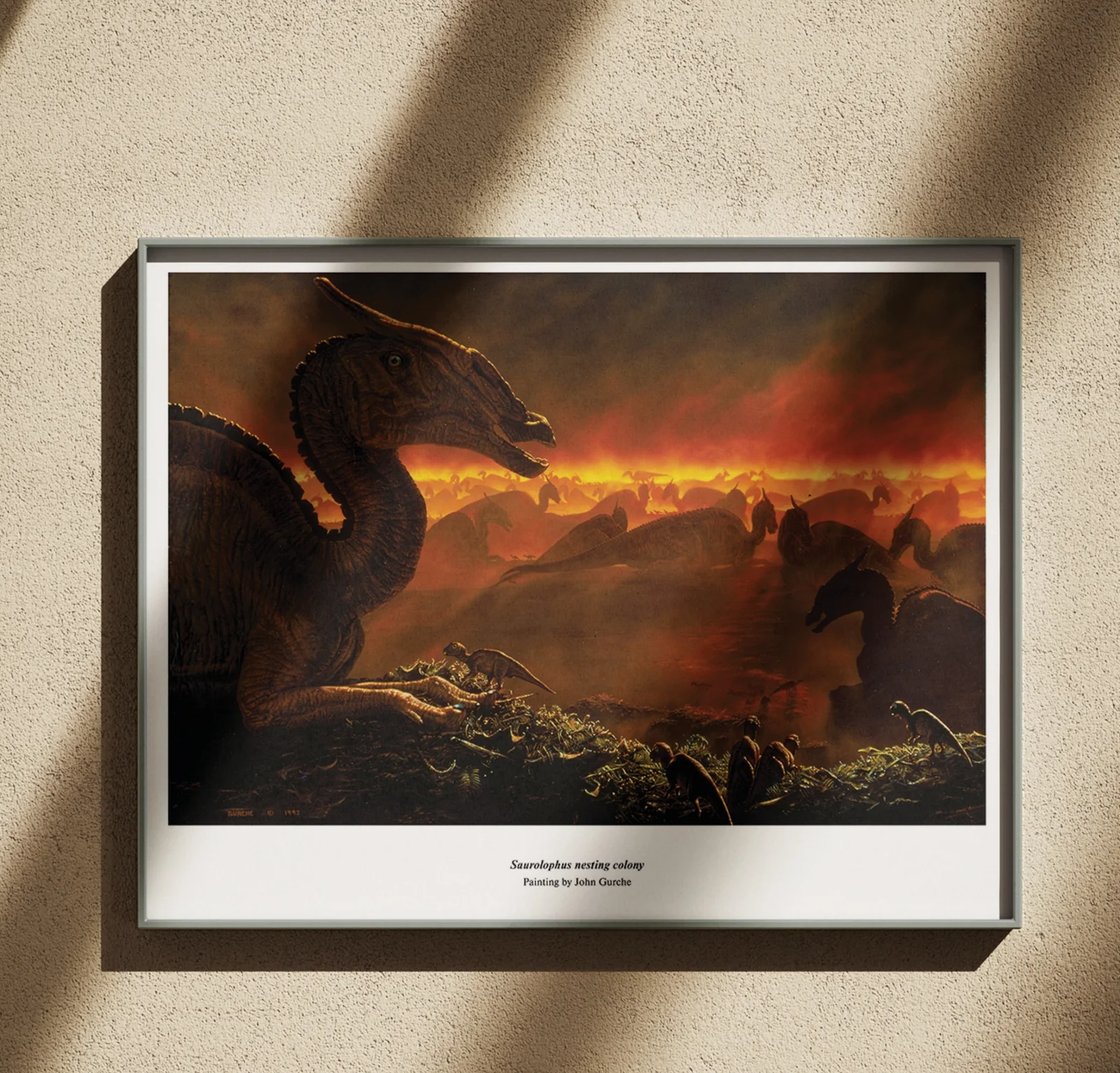
Cover, National Geographic Magazine, January 1993.
Painted 1992
In the late 1980s and early 1990s, the scientific world was on fire with new discoveries and interpretations that painted the world of dinosaurs as very different from the old image of slow, stupid, swamp-dwelling creatures. These new dinosaurs were active; some of them were even warm-blooded! Some were smart and social.
National Geographic Magazine decided to do a special story on the new dinosaurs, and commissioned me to create five paintings for the issue. They brought me on board because I had already been heavily involved in creating art related to this new wave of information about dinosaurs, including the cover of the popular book that first brought these ideas to the public (Bob Bakker's The Dinosaur Heresies) and preproduction art for the first movie to do the same (Jurassic Park), as well as covers for Discover Magazine and Natural History Magazine.
Among the new findings was evidence that some dinosaurs were actively involved in parenting. This included the discovery of six-foot hadrosaur nests and even colonial nesting sites. Baby hadrosaurs were found in fossilized nests, and some of them had worn teeth. This meant that either the babies were leaving the nest to forage for food and then finding their way back to the nest or, more likely, that their parents were bringing them food.
One of my paintings was of a group of Saurolophus at a colonial nesting site, including mothers and babies (and possibly fathers!). I painted a scene at dawn, with incendiary warm light illuminating the scene. Later I got the call: the painting had beat out some spectacular photography for the cover of the January 1993 issue.
03 / 08
The print
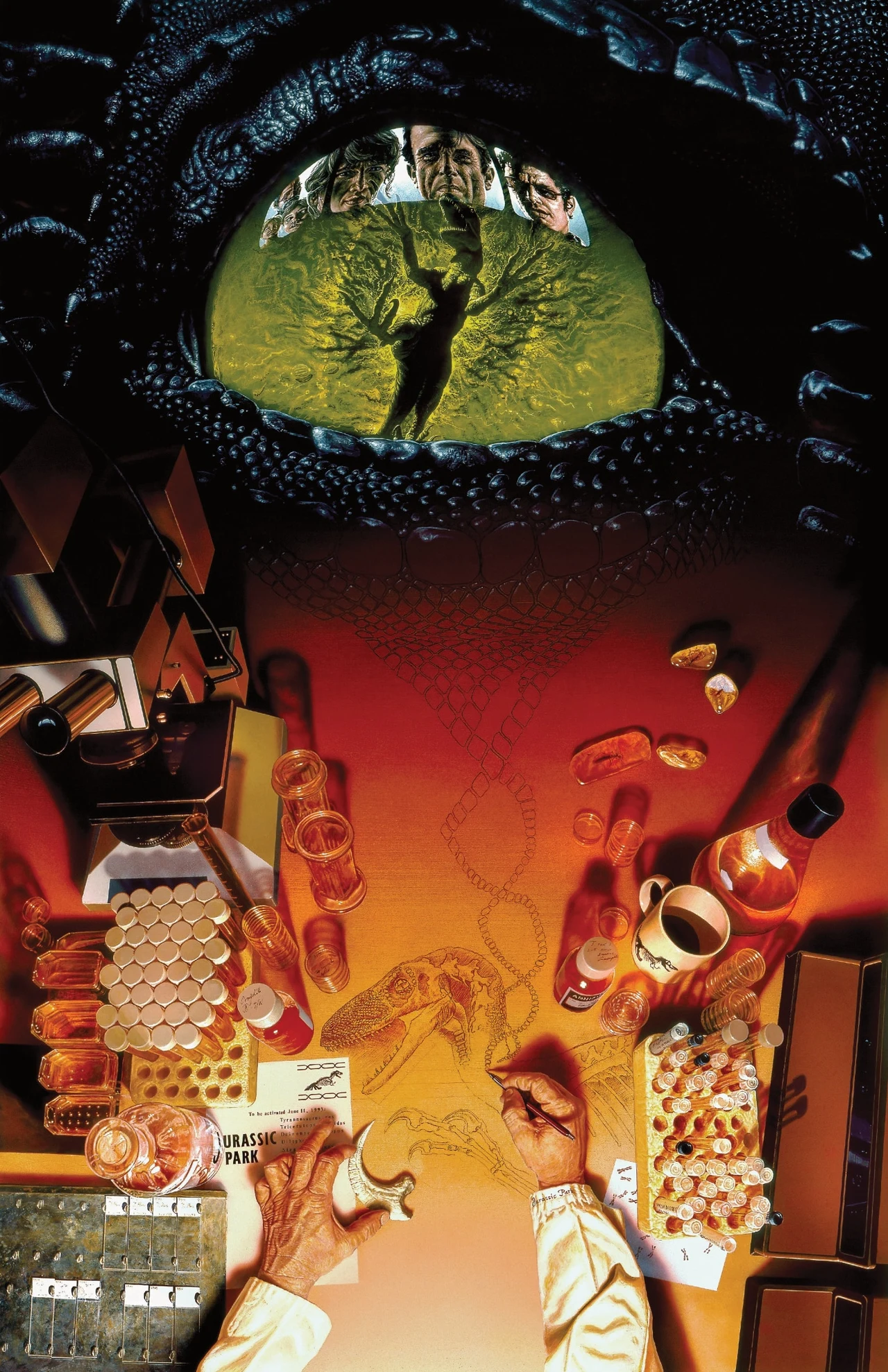
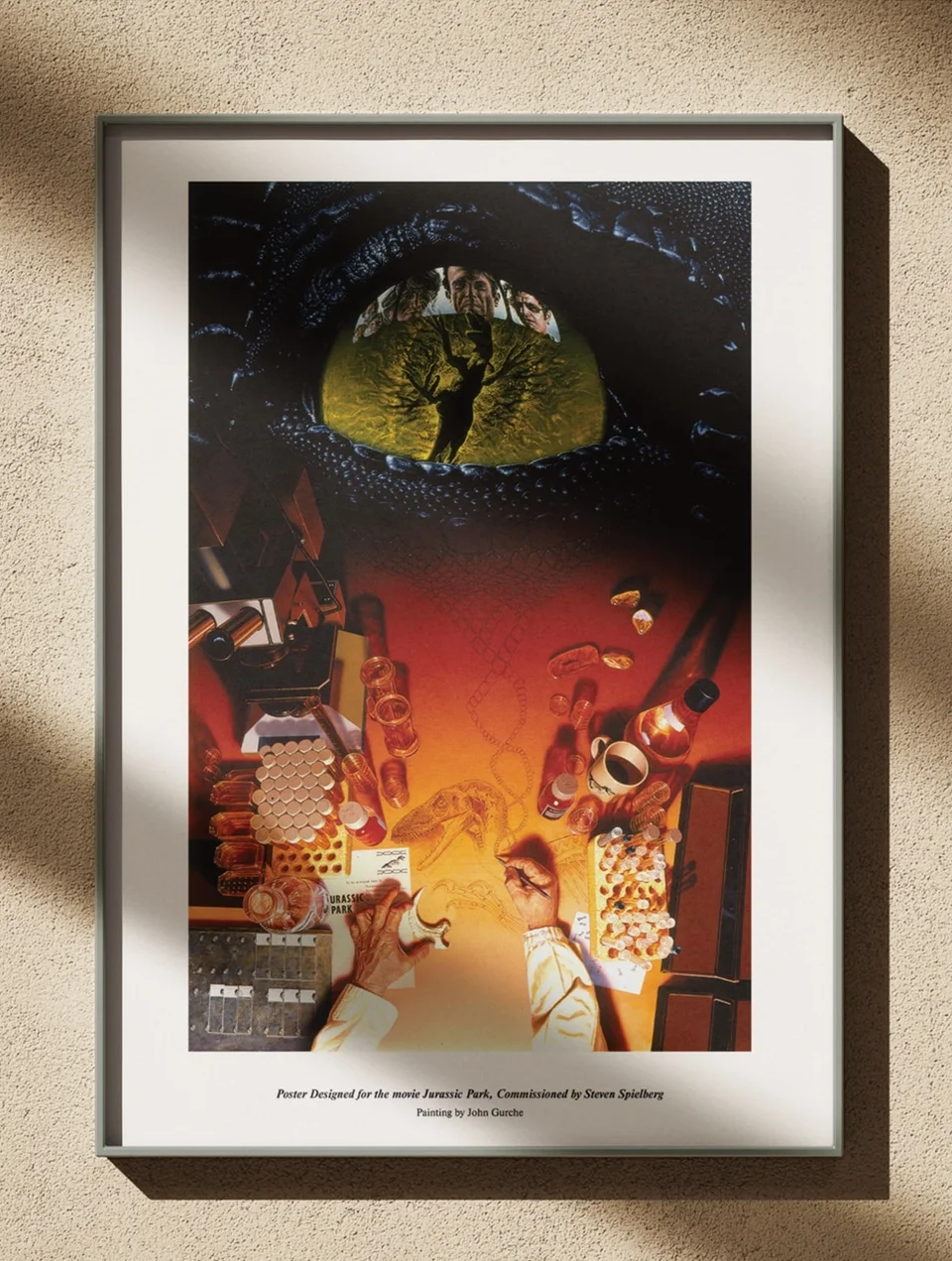
Poster painting commissioned by Steven Spielberg and Amblin Entertainment for the film Jurassic Park. Never used.
Painted 1990
In the summer of 1990 I was taking a cross-country trip with my wife-to-be. In the middle of the trip, we stopped at my home in suburban Washington, D.C., and there was a message from Amblin on my message machine.
I returned the call and asked: "Amblin who?"
"You know, Steven Spielberg's movie company. He's making a movie about dinosaurs. Would you be interested in working on it?" was the reply. I was later told that Spielberg had seen the cover of The Dinosaur Heresies and told his crew to get me on board.
What followed was a delightful experience, although somewhat painful. Spielberg wanted to present the new dynamic dinosaurs in a movie for the first time. I first did preproduction art for the Tyrannosaurus portions, then worked on the Velociraptor sections. When Amblin asked me to create poster art for the movie, I was thrilled. I began experimenting with designs.
I wanted the poster to be mysterious. I wanted to hint at the dinosaurs but not fully reveal one. The genetic connection had to be there. And of course, the main human characters had to be included in the design. How to make these work together?
I ended up with a vision from above of a tabletop in a genetics lab. Amongst some lab equipment (for reference, I actually went to a genetics lab and asked them what would be on the table if you were extracting dinosaur DNA from biting insects in amber), you see the hands of a researcher emerging from the sleeves of a lab coat at the bottom of the picture. One hand is toying with a fossilized claw of a Velociraptor.
The right hand is doodling on the desk blotter: a drawing of a Velociraptor. The scales from this drawing drift upward to form a double helix and eventually become the scales that frame a large reptilian eye in close-up view. Reflected in this Velociraptor eye are the faces of the main human characters as they look into the windows of the creature's enclosure, with somewhat disquieted expressions. The pupil of the dinosaur's eye is also an image of a leaping Velociraptor, seen from below.
I wanted to include as many of the story elements as possible in the design. Four pieces of amber, with insect inclusions, are seen on the right side of the lab table. I made a drawing of this design and brought it to Hollywood, along with several others. This was the one everybody seemed to like, and I was told that they would make a decision soon on whether I should paint it for the official movie poster.
I believed in the design, and even without the green light, I began to paint it. Then one day I got a call from Steven telling me that it was his choice for the movie poster and asking me to finish the painting. That was on a Friday. I worked long hours that weekend and finished the painting late Sunday night. By Monday, the marketing department had gained control and decided on a logo approach instead — something that could be clearly seen across the room on lunch boxes and t-shirts. I was told not to bother completing the painting. For the next few days, I tried to reach Steven about this, but he is surrounded by an army of people whose job it is to keep you from getting ahold of him. This was very disappointing, but even so, I was very glad for the experience and I love the painting.
04 / 08
The print
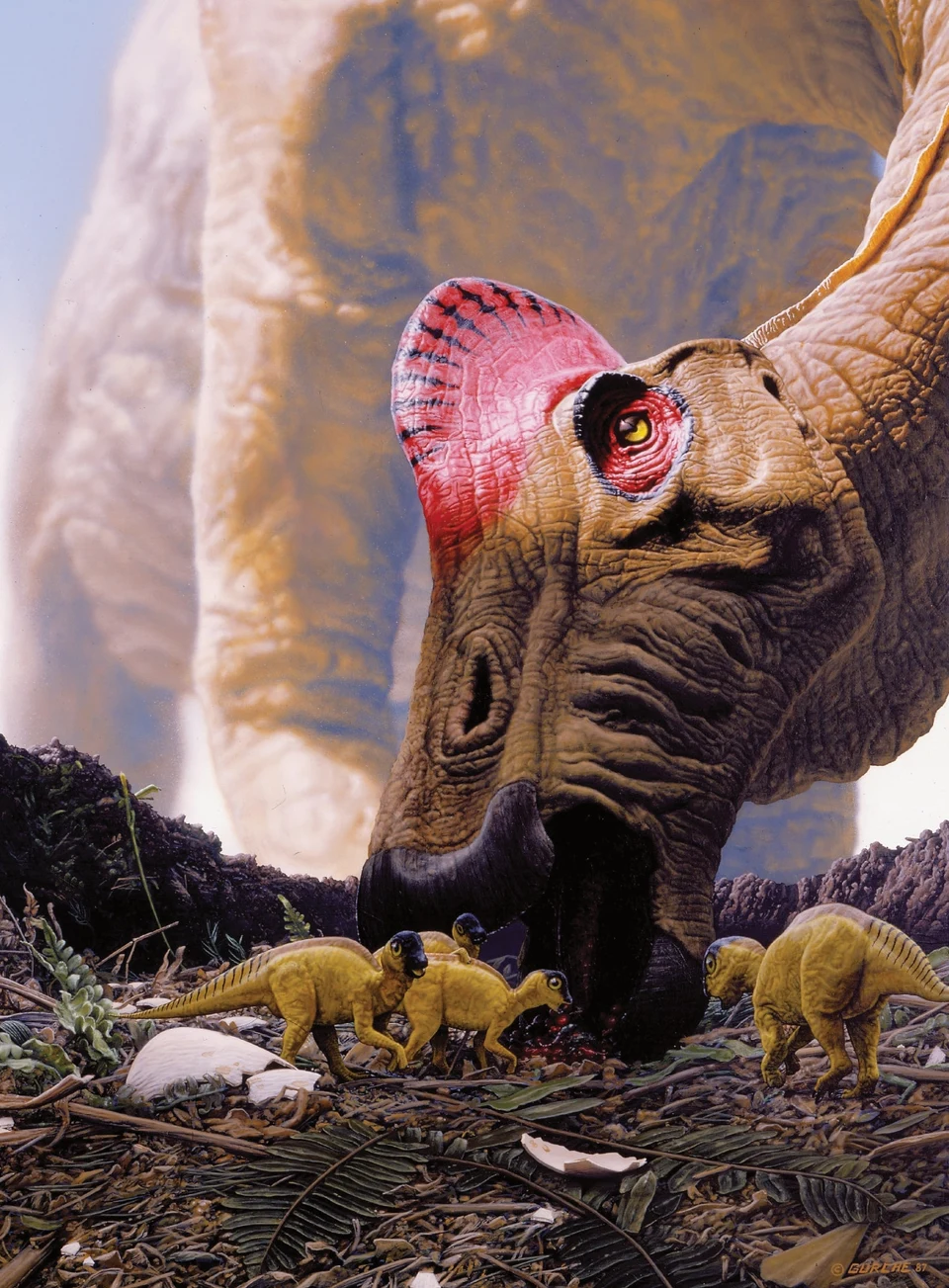
Commissioned by the Denver Museum of Nature and Science. Cover art for Prehistoric Journey.
Painted 1995
05 / 08
The print
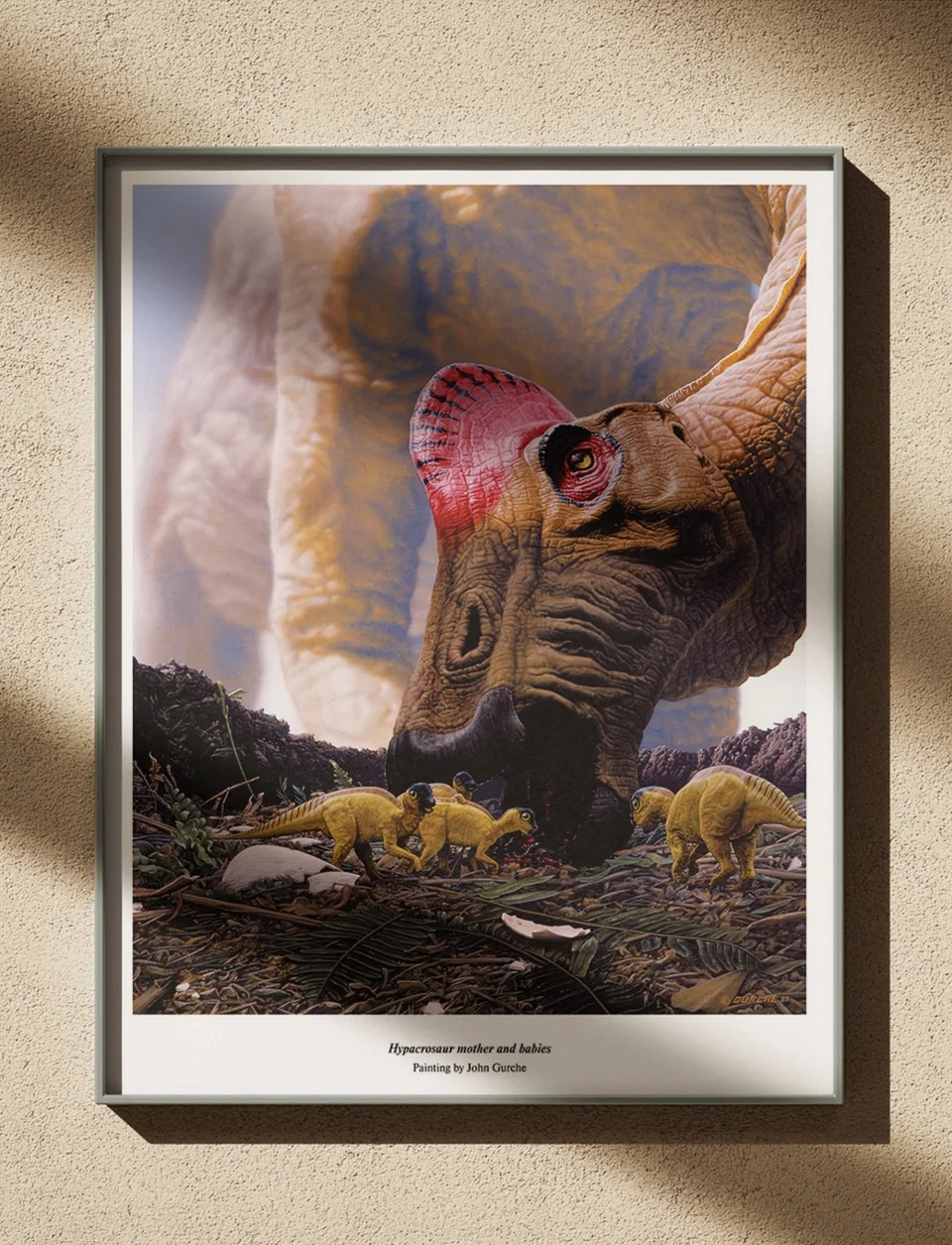
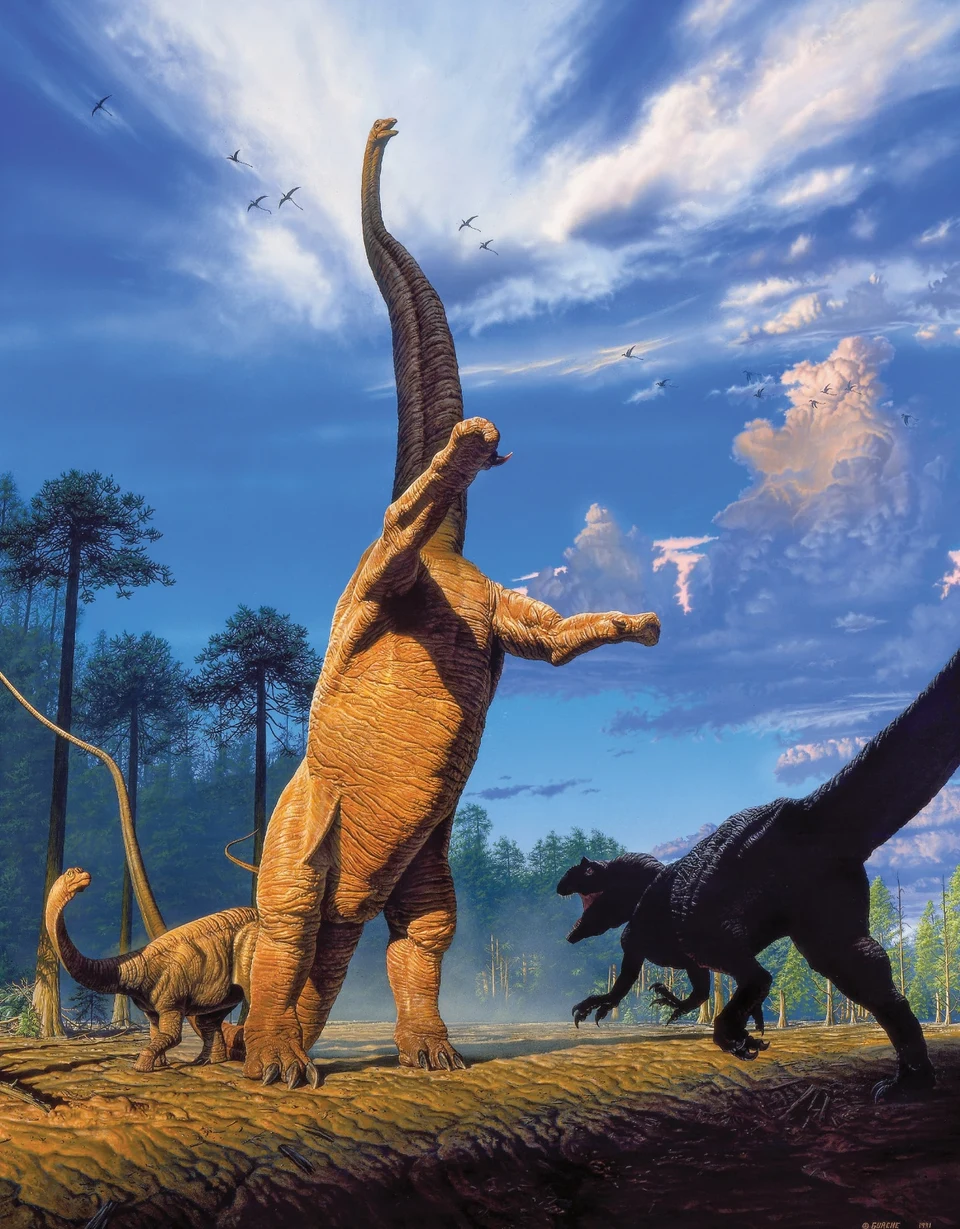
Cover art for Discover Magazine, March 1987.
Painted 1987
06 / 08
The print
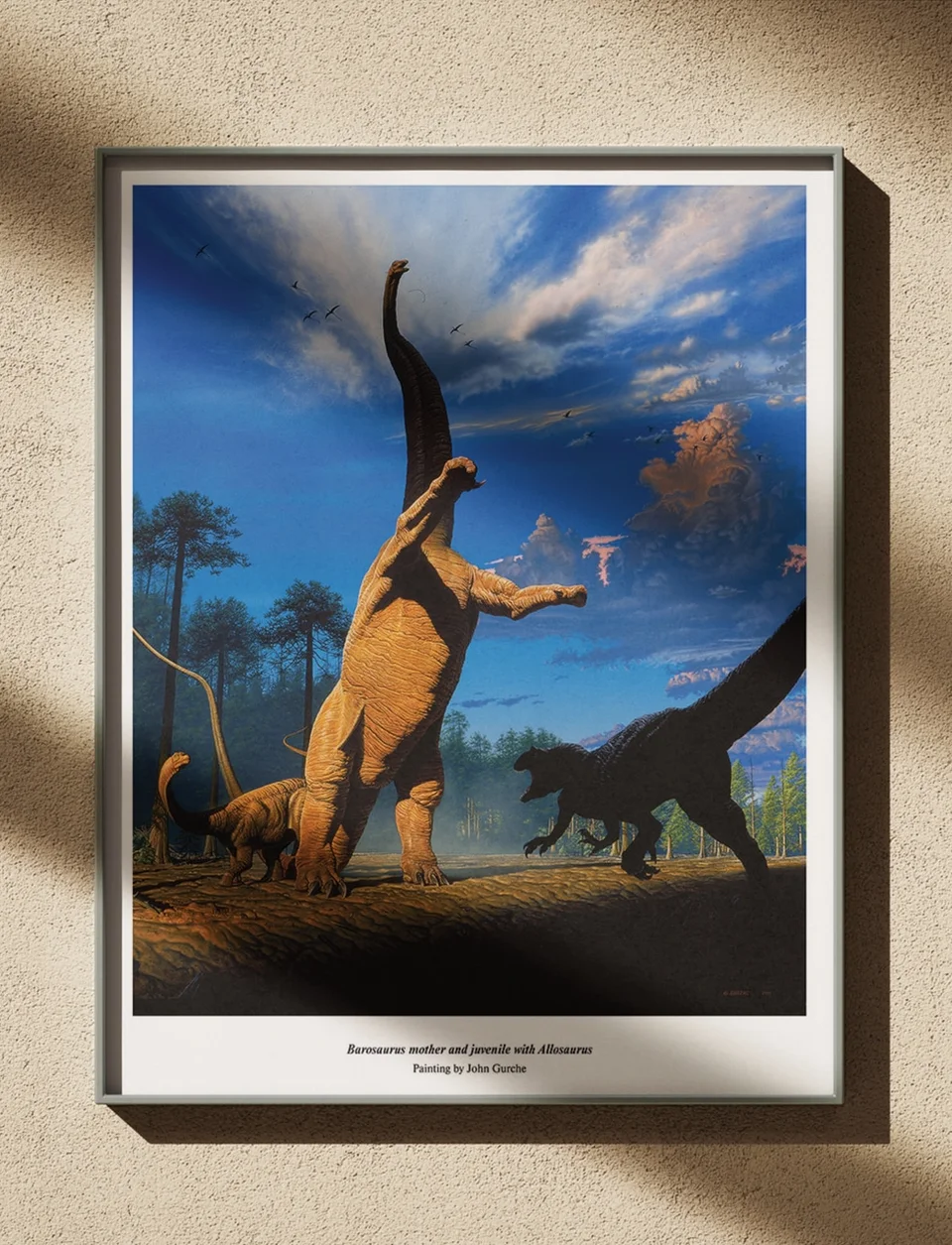
Commissioned by the American Museum of Natural History. A reproduction accompanies the AMNH rotunda exhibition. Cover art for Natural History Magazine, December 1991.
Painted 1991
In the late 1980s, after the publication of The Dinosaur Heresies, there was a firestorm of public interest in dinosaurs, as new ideas that made them much more dramatic creatures poured in from the scientific community. They were active! Some were warm-blooded! Many were social, caring for their young or hunting in packs! I was fortunate to be involved in the presentation of these ideas to the public, doing art for magazine covers (National Geographic Magazine, Discover Magazine, Natural History Magazine), dinosaur stamps by the U.S. Postal Service, and the movie Jurassic Park.
The American Museum of Natural History decided to create a spectacular dinosaur tableau for their rotunda exhibit. This would be composed of three skeletons, with a mother Barosaurus rearing on its hind legs to protect its baby from a marauding Allosaurus. The AMNH contacted me in 1990 to create a painting of this scene, so that a reproduction could accompany the rotunda mount. I accepted the challenge.
One challenge in creating the painting was to capture the enormity of the scene. The head of the mother Barosaurus is five stories up from its feet! In dealing with this, I had to make the perspective change quite a bit from the lower part of the painting to the upper part, where everything is seen from below. The clouds had to change, the pterosaurs had to change, and the dinosaur itself had to change so that the head is looking down at us from a great height.
There is debate among scientists about whether a huge sauropod such as this could actually rear up on its hind limbs. The Smithsonian's paleontologist Hans-Dieter Sues replied to questions about this: "Yes, but only once."
A reproduction of the painting now accompanies the AMNH rotunda mount. The rotunda mount, and my fleshed-out painting of the scene, has become the AMNH's symbol of the dynamic new ideas about dinosaurs.
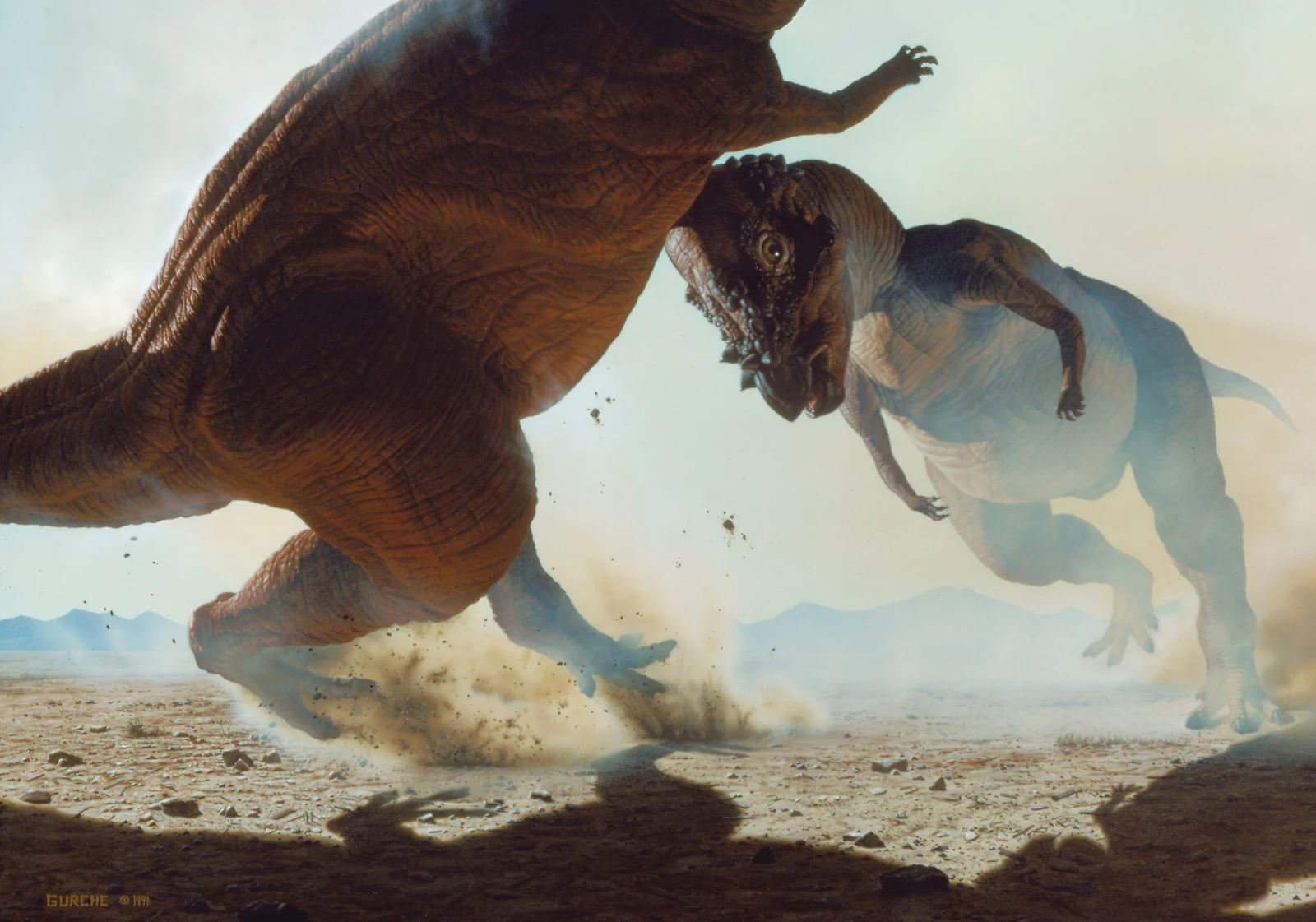
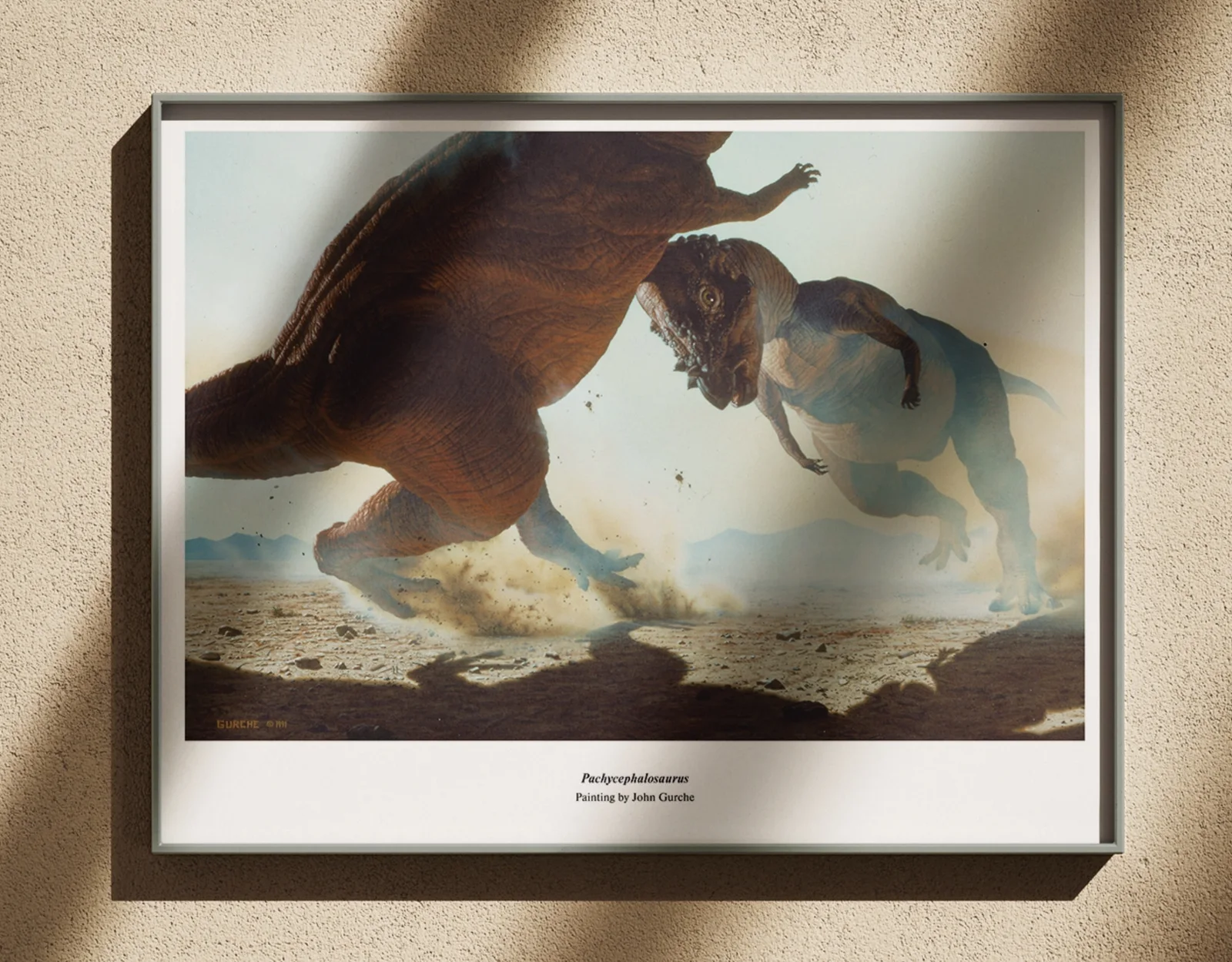
07 / 08
The print
National Geographic Magazine, January 1993. Also the back cover of The Art of National Geographic: A Century of Illustration, 2000.
Painted 1992
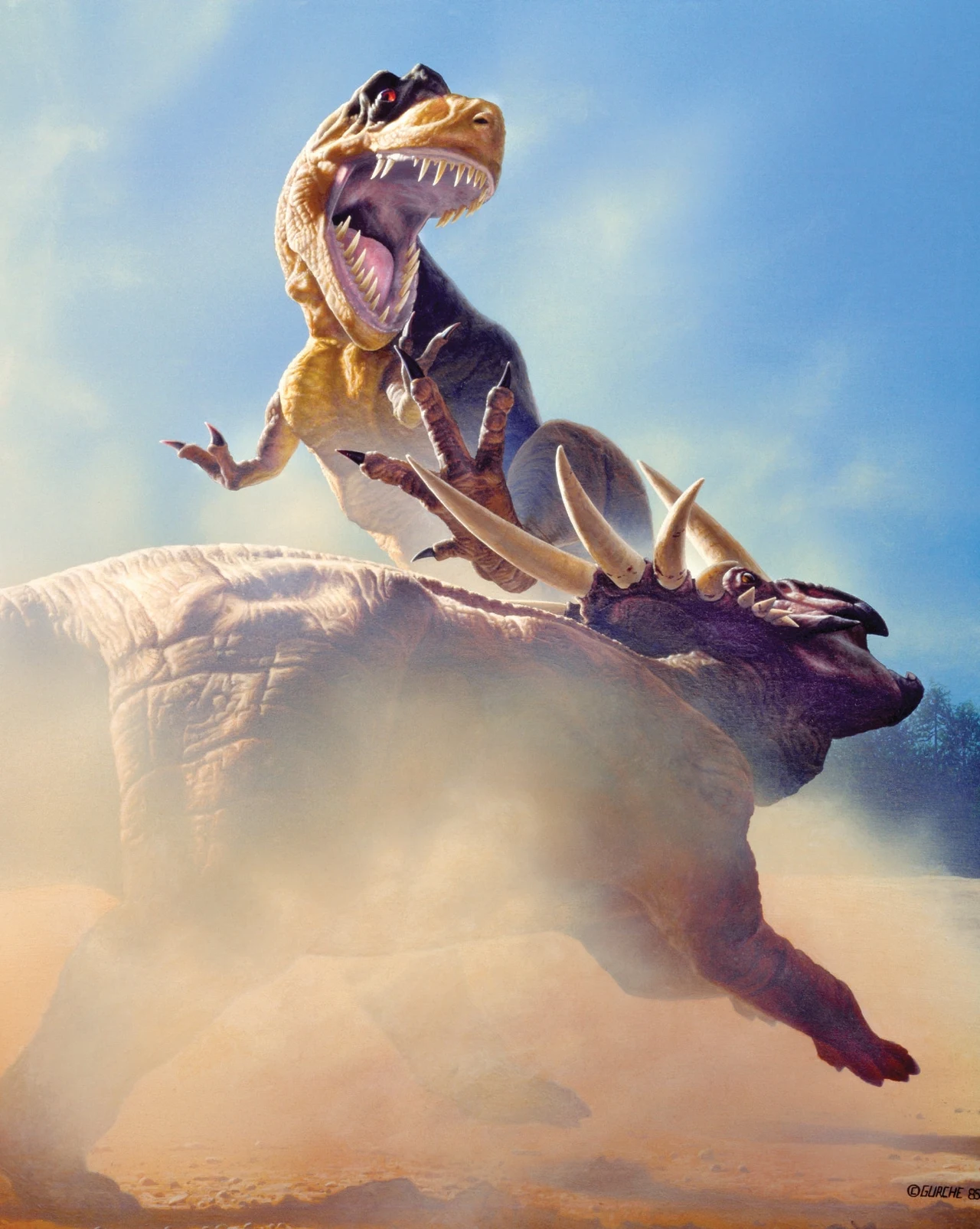
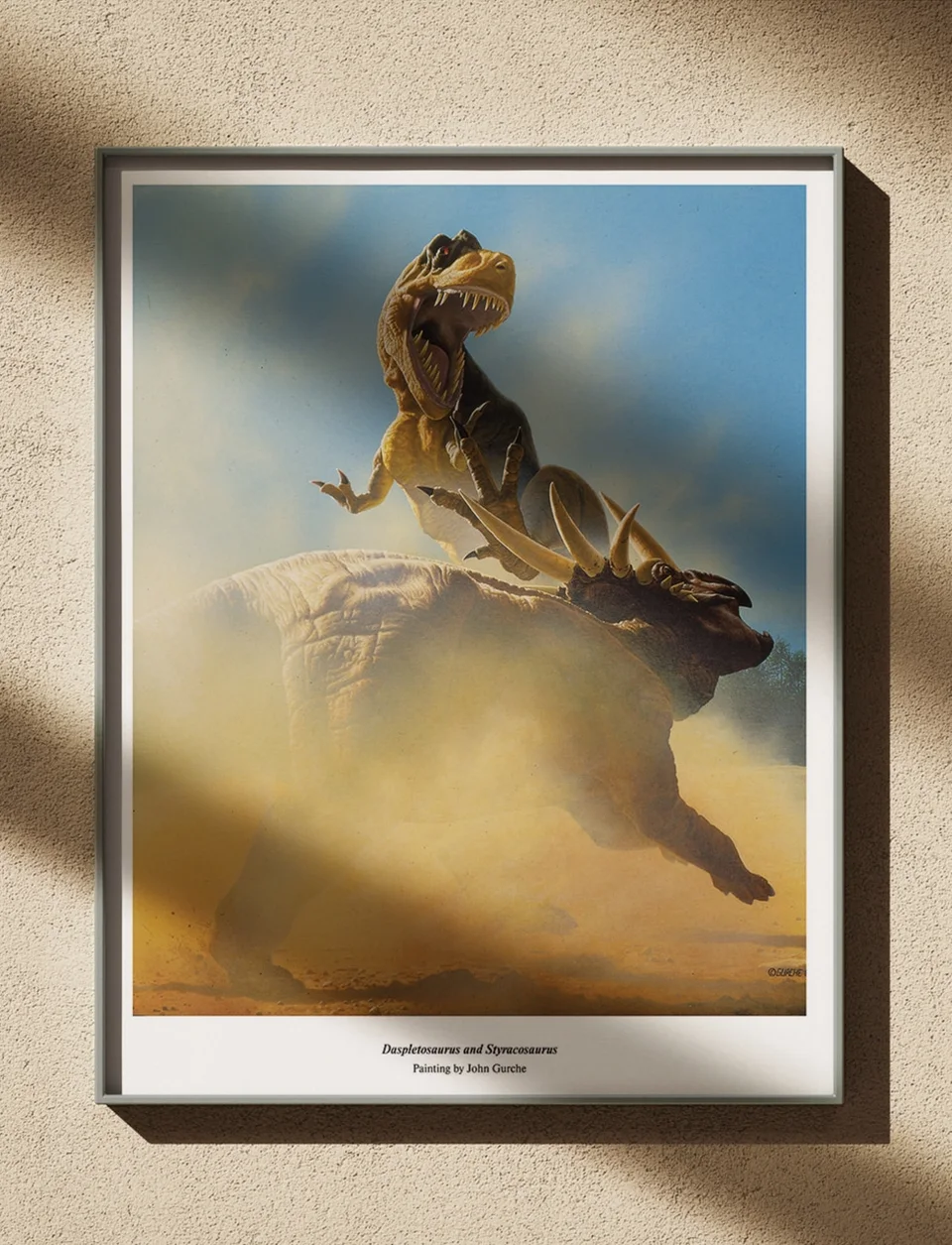
08 / 08
The print
Cover art for The Dinosaur Heresies by Robert Bakker, William Morrow, 1986.
Painted 1986
It all started when Yale paleontologist John Ostrom made a discovery in the late 1960s that did not fit the prevailing view of dinosaurs as slow, stupid, solitary, cold-blooded animals. This was the American Velociraptor, later to star in the movie Jurassic Park. This creature hunted with an enlarged toe claw, implying a very active lifestyle. Not only that, but they seemed to have been social, hunting in packs. The ball began to roll.
The early 1980s was a very exciting time to be working as a paleoartist depicting dinosaurs. Radical new ideas about how dinosaurs lived were being debated among scientists, but had yet to reach the public. When these new ideas were finally presented to the public, I was fortunate to be part of that effort, depicting dinosaurs as active, intelligent, social creatures.
Fast-forward to 1985. I received a call from William Morrow Books, who told me that a student of Ostrom's, Bob Bakker, was coming out with a book on the new dynamic dinosaurs. Would I be interested in doing a painting for the cover? I had painted dinosaurs for the Smithsonian, but they had been the old tail-dragging kind. I was excited about this new challenge.
I wanted to create a painting that depicted high activity levels. What if we were to stand right next to a conflict between a horned dinosaur and a tyrannosaur? With the cranked-up activity levels hypothesized in the book, I felt this would be like standing next to two locomotives colliding. I had to get that energy into the painting. I began to see a great deal of dust being kicked up. Both dinosaurs could be depicted in unsustainable poses, emphasizing that you are seeing one frame in a very active scene.
I also wanted to emphasize the dinosaur–bird connection discussed in the book. I chose a bird-like pose for the tyrannosaur (called Daspletosaurus), defending itself from a lunge by the horned dinosaur (called Styracosaurus) with its foot. This would also suggest a high activity level by presenting an unstable pose that had to be part of an action sequence. For coloring in the Daspletosaurus, I chose a bird-like model — that of a black-capped chickadee.
The Dinosaur Heresies was a blockbuster. It began a huge uptick in public interest in dinosaurs. I was later told by someone at Amblin Entertainment that The Dinosaur Heresies cover painting was the reason why Steven Spielberg brought me on board to work on the movie Jurassic Park. In storyboard drawings for the movie, and in the first Tyrannosaurus scene, the creature is seen doing a lot with its feet.
These prints are offered to museums, institutions, and collectors. Please get in touch to discuss availability and terms.